
Park Ave Modernism
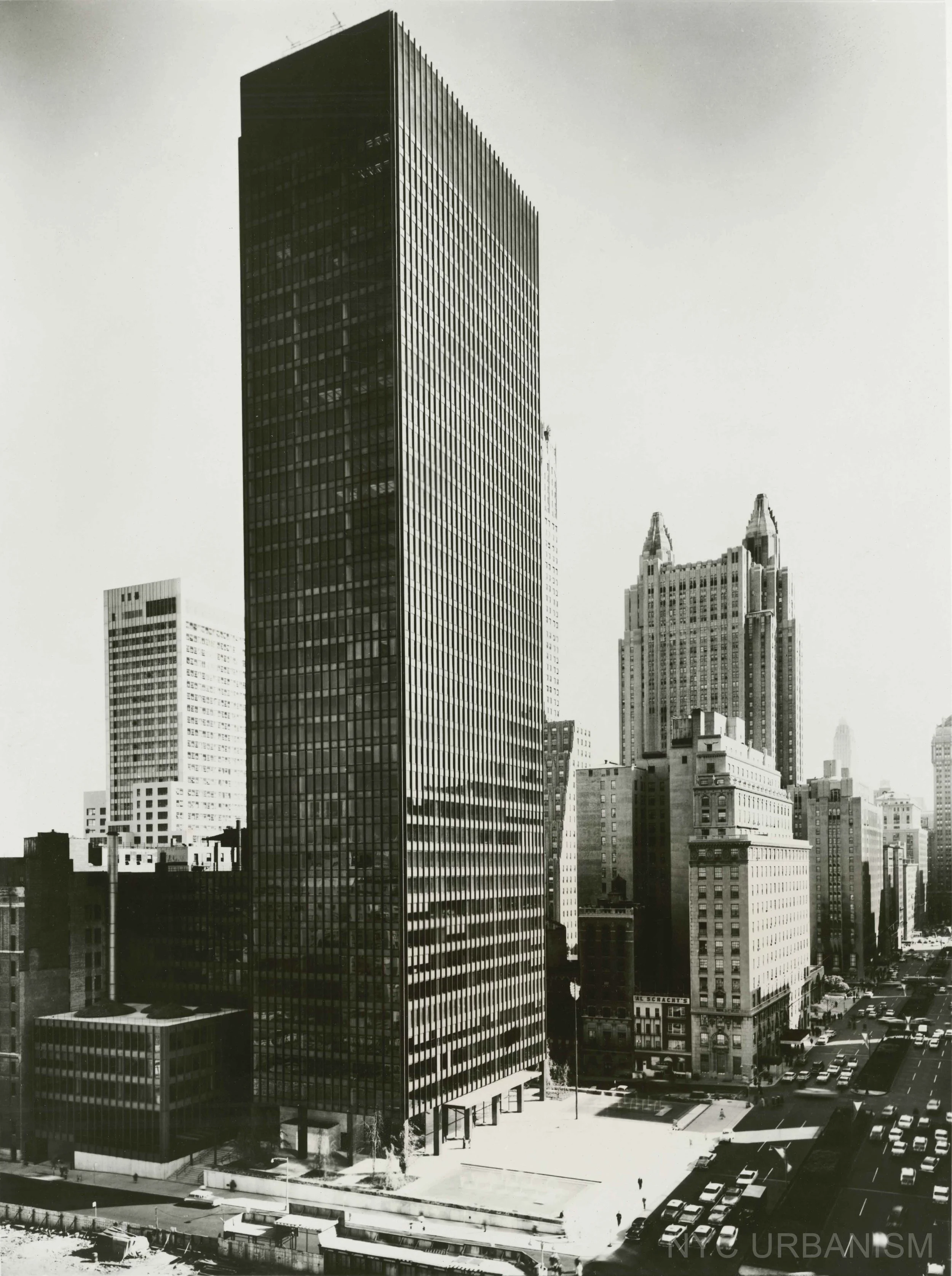
Mies van der Rohe's iconic Seagram Building at 375 Park Avenue, circa 1960.
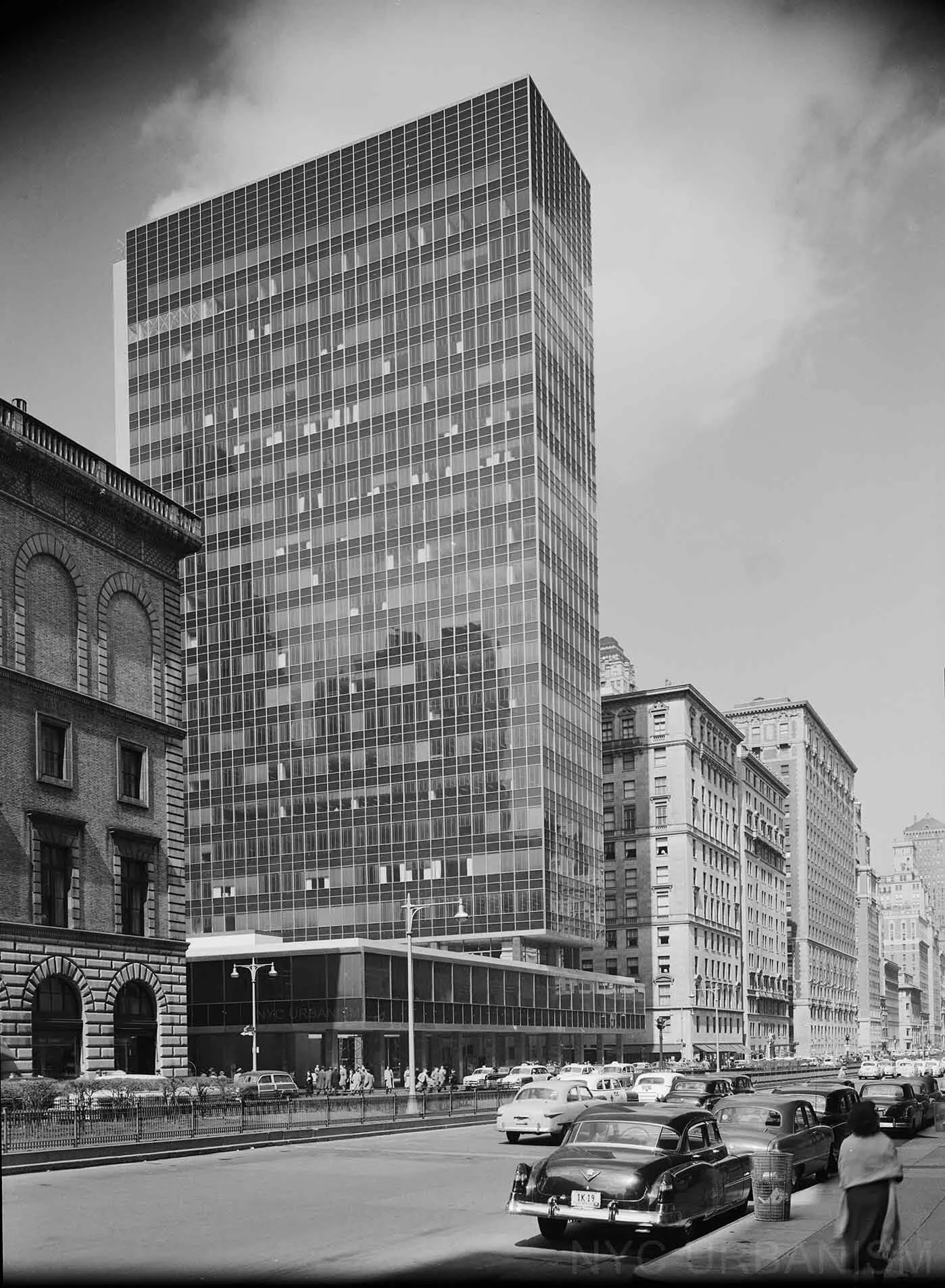
Park Avenue is a nexus of Corporate Modernism with its sleek midcentury glass curtain wall towers. Lever House, designed by SOM’s Gordon Bunshaft and Natalie de Blois features the city's first building wrapped in a glass curtain wall. Built in 1952, the building was a divergence from previous office towers that were clad in masonry with setbacks as mandated in the 1916 zoning resolution. To construct a slab tower without setbacks, Lever House only occupied 25% of the site, leaving the remaining space open to the public.
In 1958 Mies van der Rohe’s Seagram Building followed this form, occupying only 40% of the site with a grand public plaza, reflecting the post-war planning ideology of towers surrounded by open space. Generally regarded as the finest example of the International Style, Seagram would influence a generation of modernist mid-century skyscrapers. Three years later a major zoning resolution would incentivize this style by offering bonuses for public amenities like open space and regulating floor area, not massing.
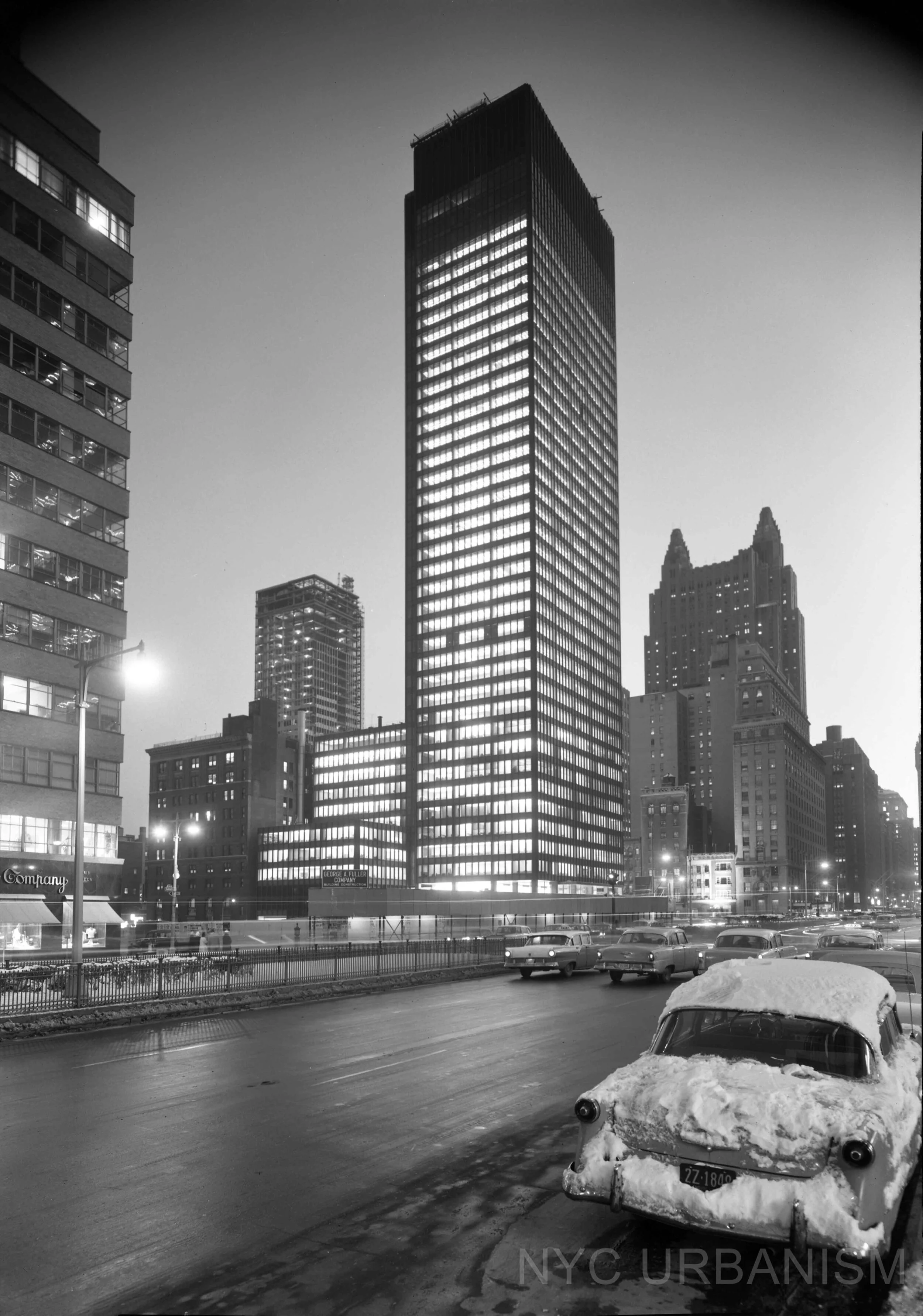
Architect Ludwig Mies van der Rohe’s Seagram Building in 1958 after construction completed.